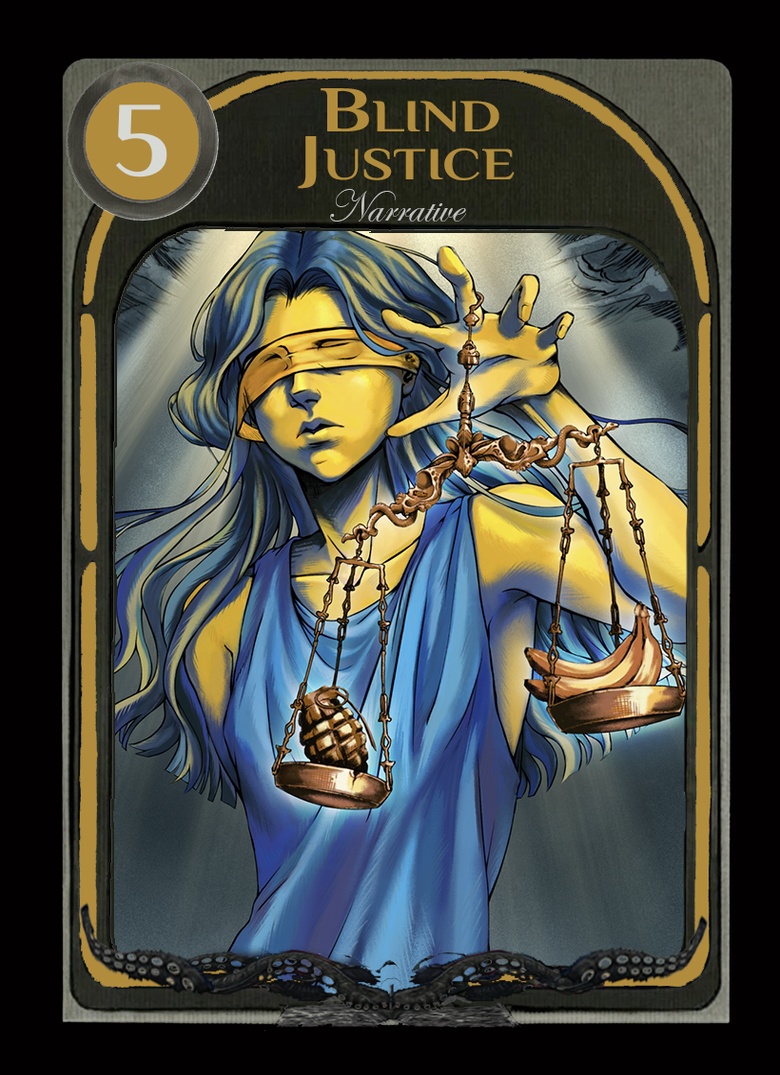
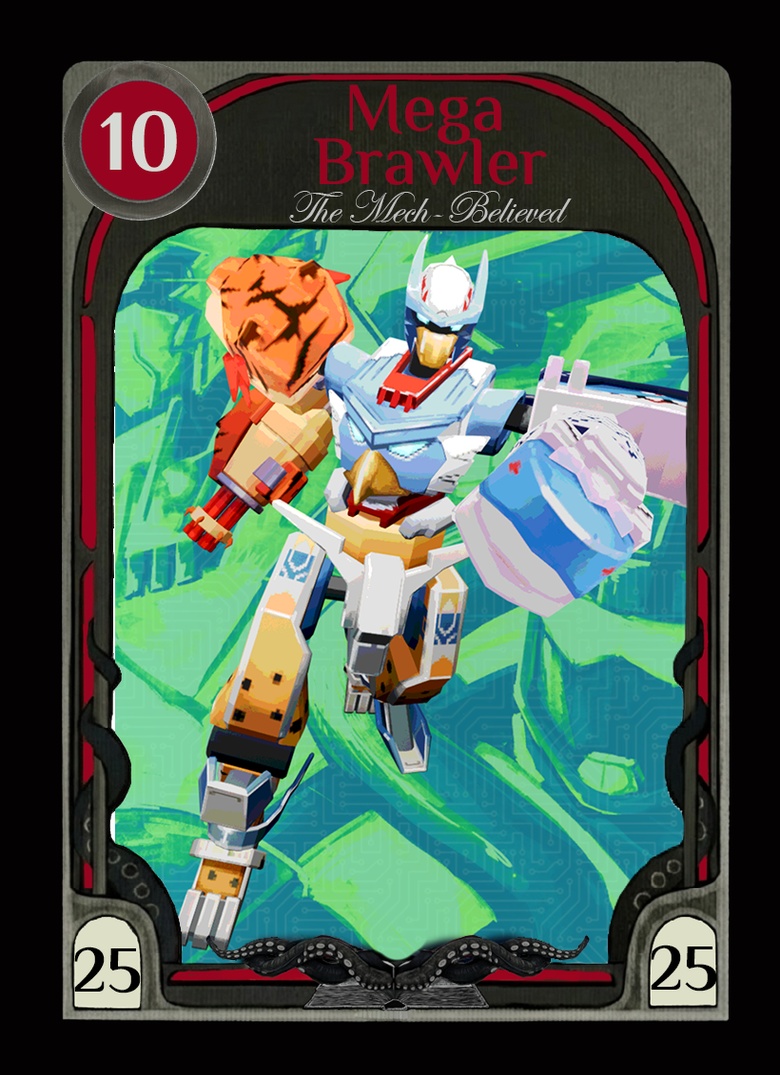
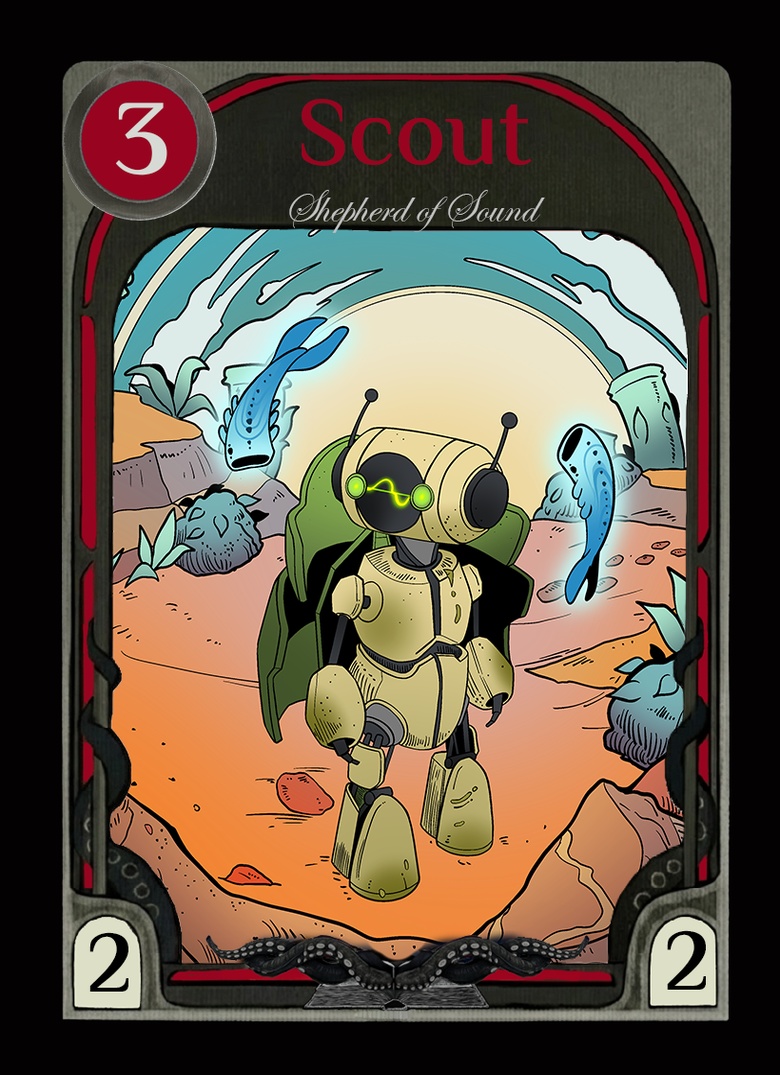
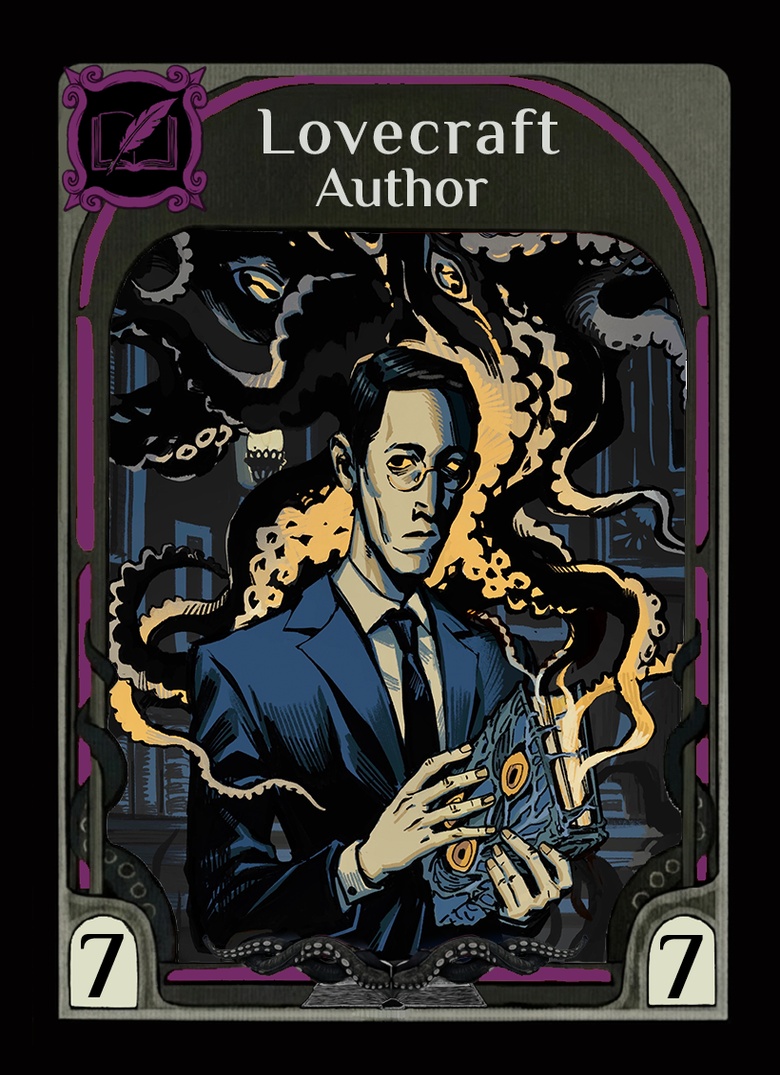
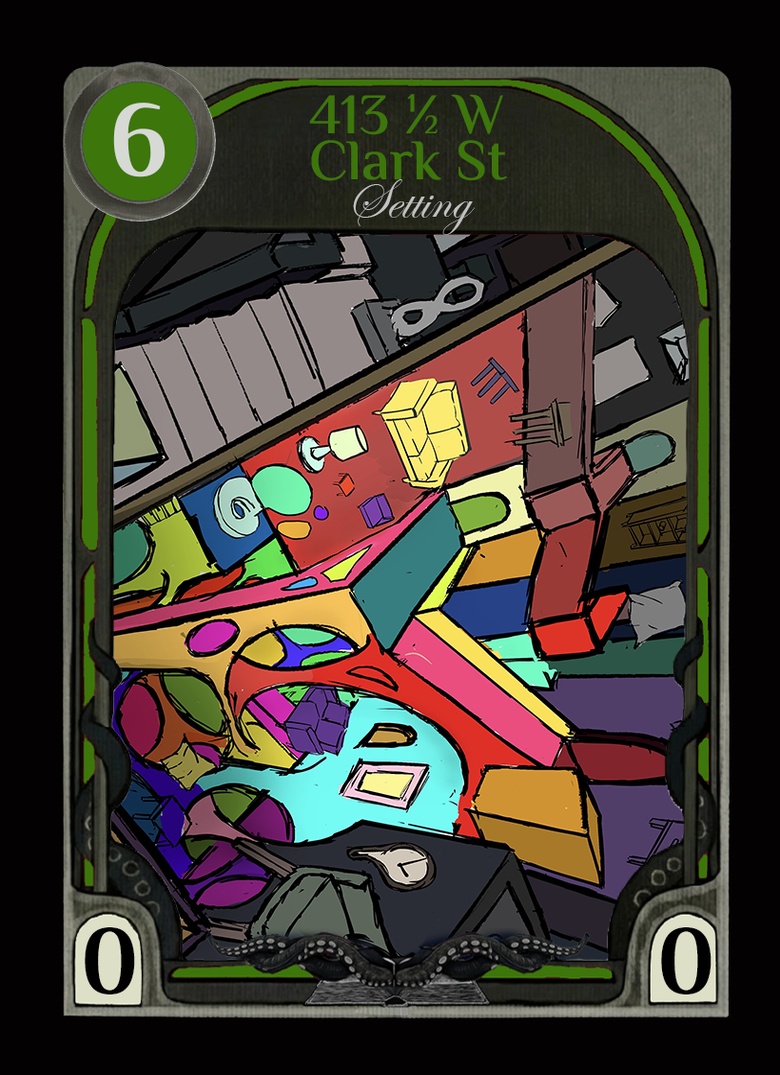
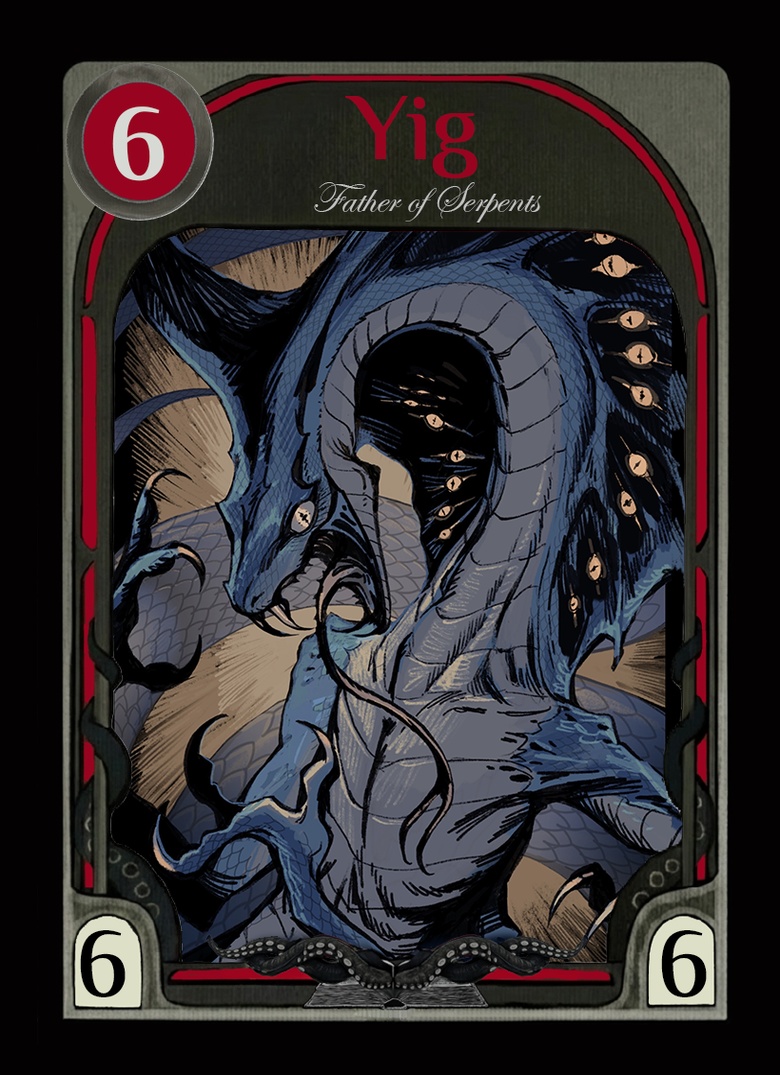
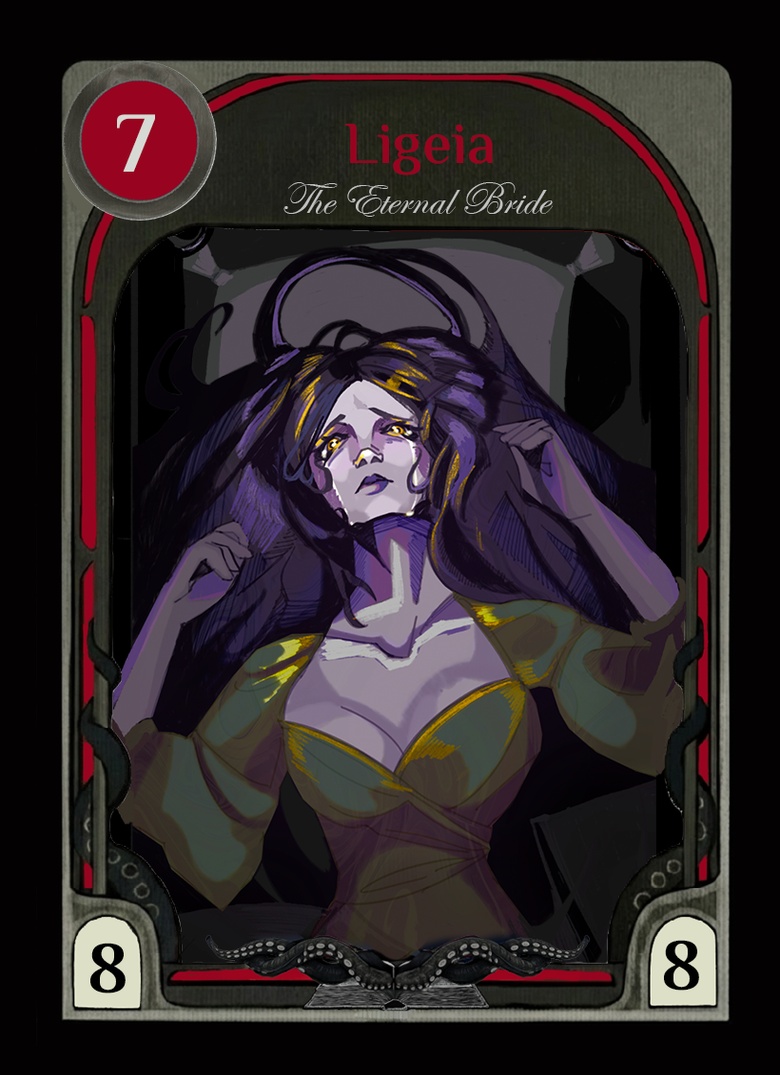
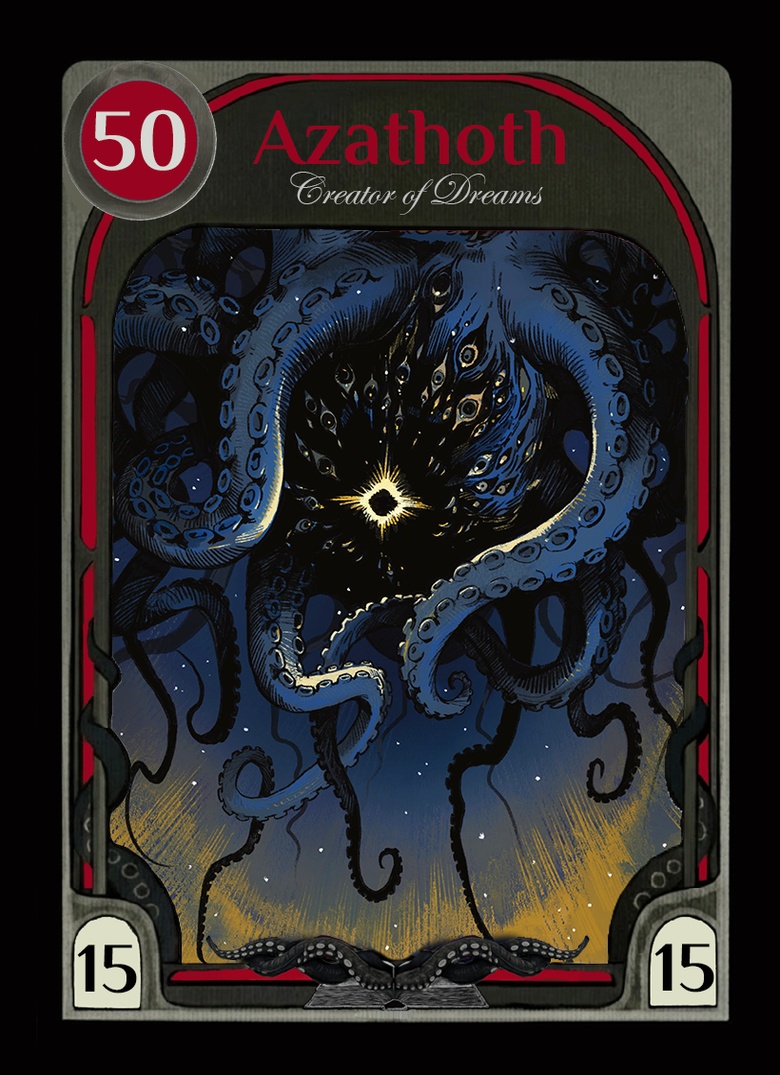
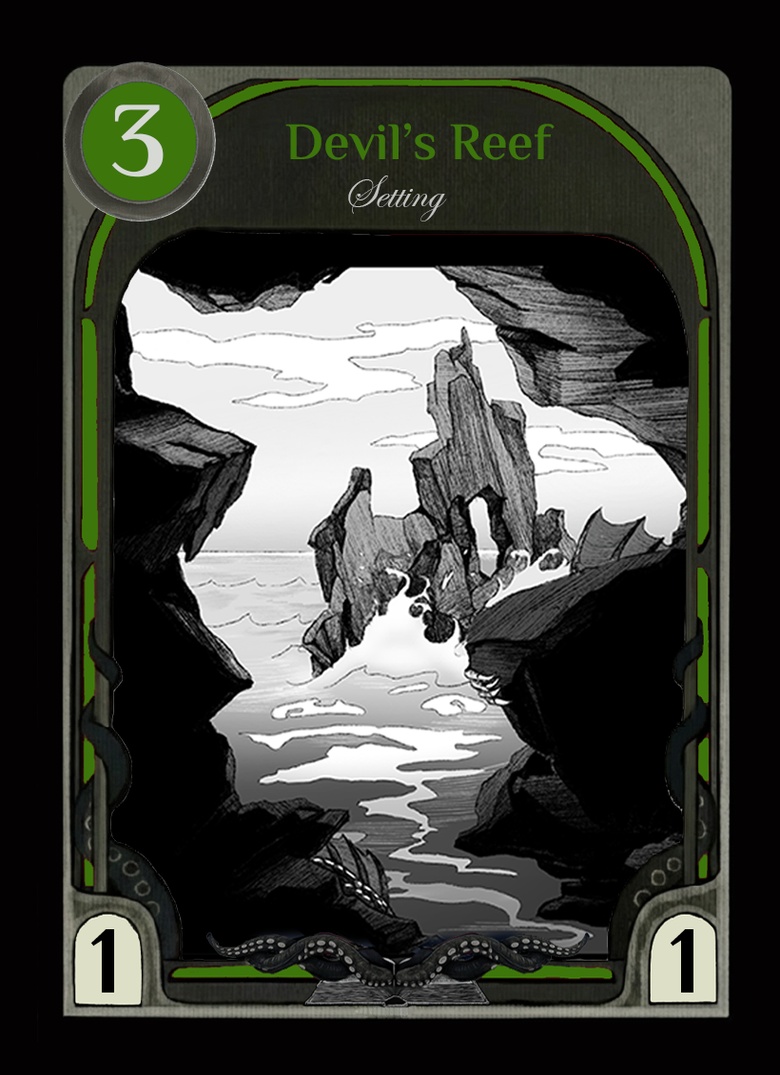
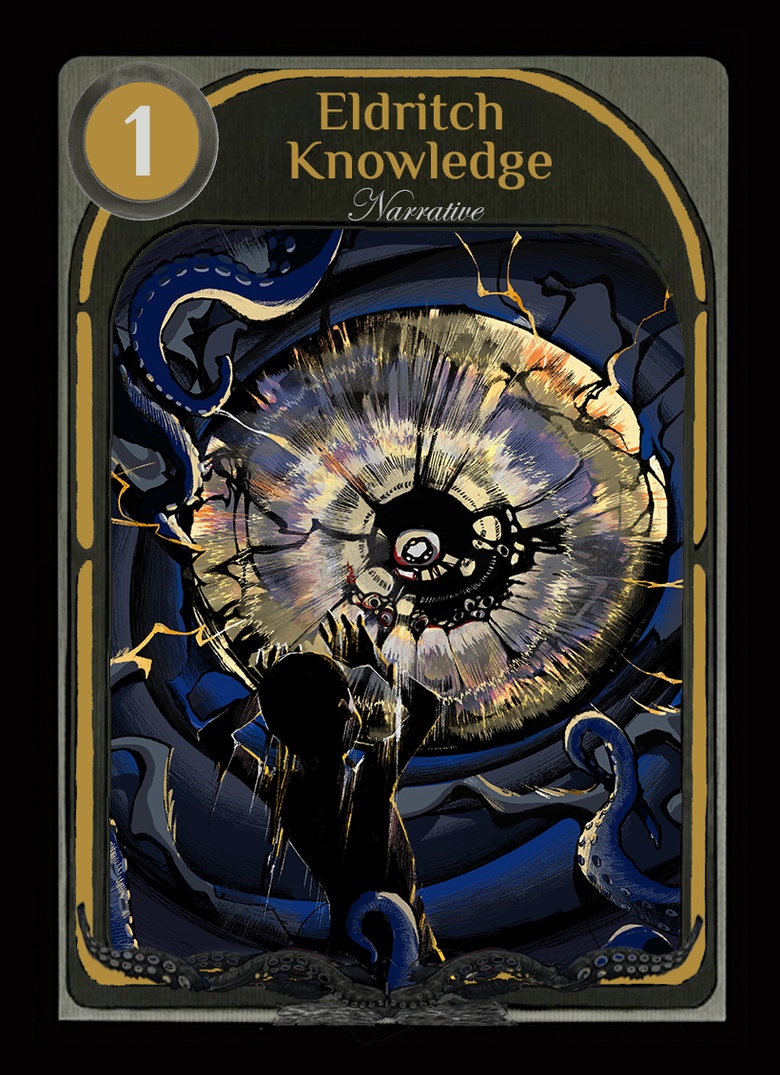
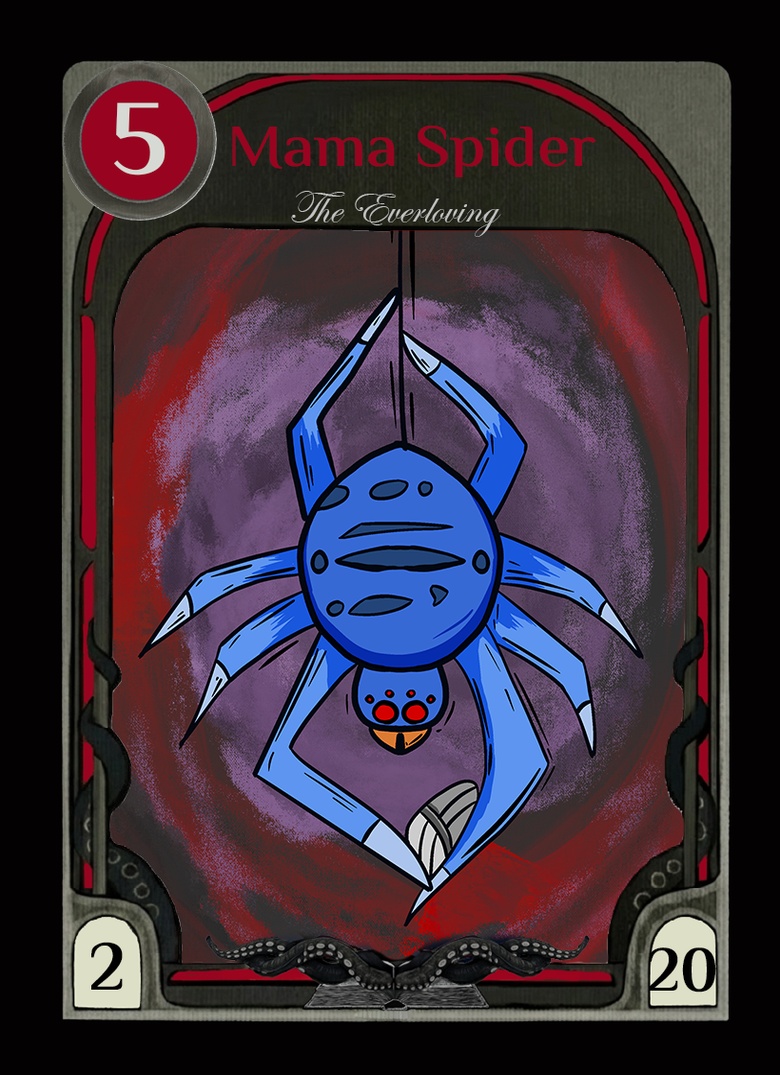
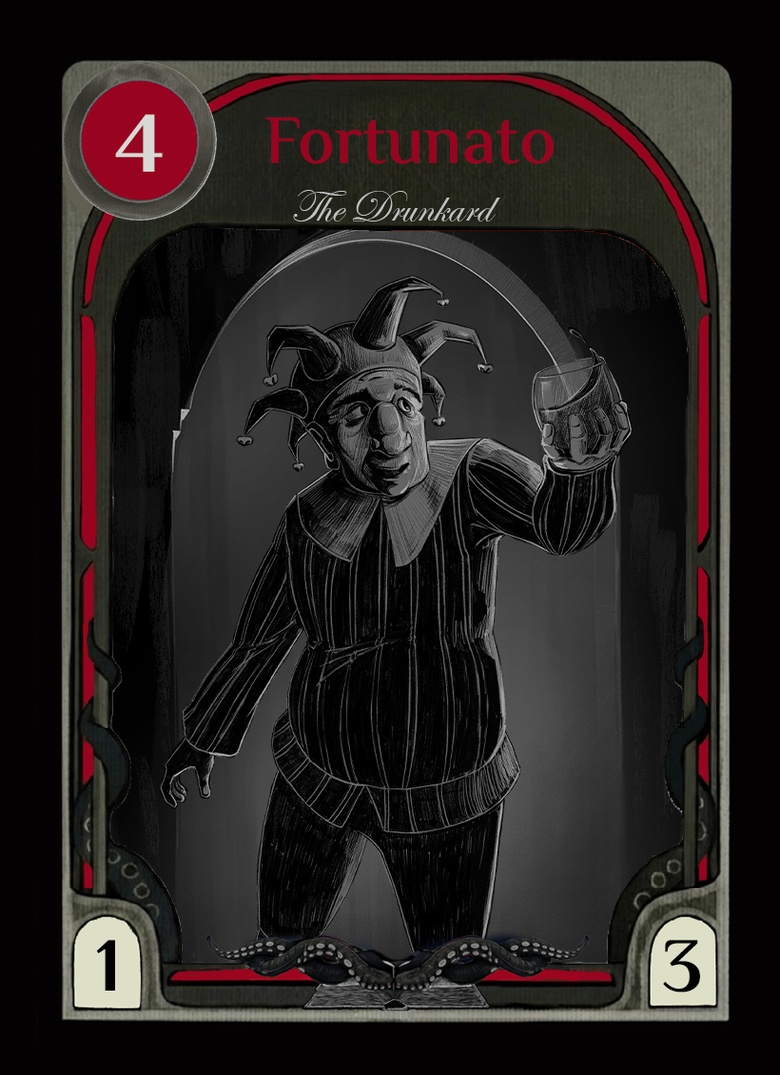
Masterworks of Horror grew up as a physical deck and a digital game side by side. The paper version came first as the prototype the whole project was built on, and I kept iterating on it in my own time over the course of a year: a full ruleset, the Poe and Lovecraft cards and their foil, real booster packs, and crossover cards made with twelve other USC teams. This is how it came together.
Every card was designed, laid out, and prepped for print by hand. I built the Photoshop templates the whole set runs on, so each new card dropped into a consistent frame. Tap any card to see it up close.


A selection from the physical set, which focuses on the Poe and Lovecraft authors. Card art from Masterworks of Horror, made by the art team led by Bee Wynne and Lucas Delgado, with my input.

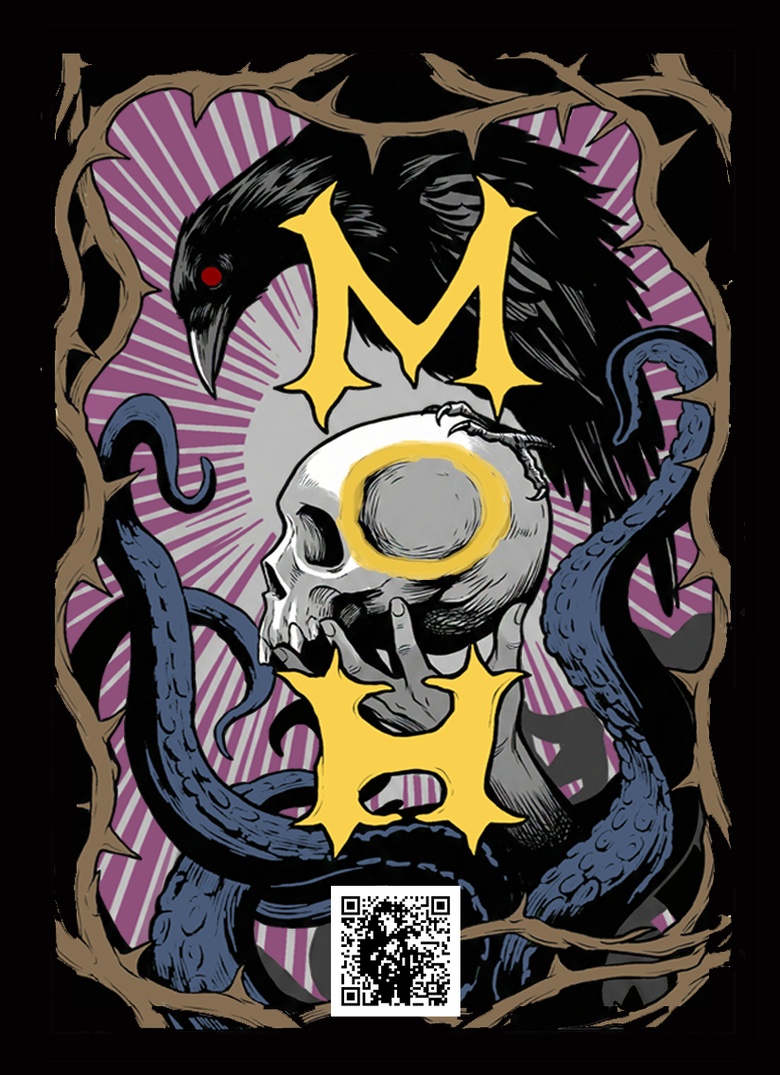
The card back had to carry the brand in a single image: the raven, the skull, the creeping tentacles, and the MOH mark wrapped in thorns. It is the first thing anyone sees across the table, so it had to read instantly as ours. The code in the corner ties each physical card to its place in the larger project.
The foil is the part I am proudest of. For every card I drew a separate spot-foil mask, a black-and-white map that tells the printer exactly which areas catch the light. Only the figures shimmer, so the art stays readable and the magic stays special.


The mask isolates the figure so the metallic foil hugs the character, not the whole card.


Every card in the set got its own hand-built mask, drawn to match its art exactly.


In hand, the foiled areas shift and glint as you tilt the card under light.
The real, printed foil catching the light. This is the payoff after a year of masks and proofs.
Designing the cards was only half of it. I worked directly with printers both overseas and here in the US to get the stock, the cut, the color, and the foil right, trading proofs back and forth until the cards felt the way they should in your hand.
The end result was real, sealed Masterworks of Horror booster packs, the kind you actually tear open. Seeing the deck come off a production line instead of a home printer was the moment it stopped being a prototype and became a product.
On the line at the printer.
I ran a collaboration with twelve other USC game projects. Each team gave me art from their game and I built it into a real Masterworks card with its own rules, so their world could show up inside ours. We handed these collab cards out at the USC Games Expo, and I worked with my engineering team to bring them into the digital build too, where they can be played in the Itch demo.
The collab cards, integrated and playable inside the digital version of Masterworks of Horror.
I wrote the full physical ruleset from scratch. It is a turn based TCG where you play as a legendary horror author and fight Literary Battles to prove who is the greatest. Here is the short version.
March a character past your opponent's Origin Zone and touch their Masterwork to ruin it for an instant win. If both Masterworks survive all three Acts, the player with the most Literary Acclaim takes it.
A game is 50 Chapters across three Acts of 15, 20, and 15. It opens with the Prologue and closes with the Epilogue, so the player going second always gets a fair final turn.
Two lanes, five rows. Your characters start in your Origin Zone and advance up the board toward the enemy Masterwork. Take a zone and it becomes yours, which is how you claim ground for Settings.
Characters do the fighting and the marching. Items bolt onto them. Settings score Literary Acclaim and shape the board. Plots resolve at once and are the only cards you can play on your opponent's turn.
You gain 1 Inspiration each Chapter, up to 10. Even drawing a card costs 2, so every turn is a small economy of what to spend and what to hold.
Characters advance at the end of your opponent's Chapter. Move into an occupied zone and you fight: Might deals permanent damage to Will, and anything that hits zero is sent to the Unfinished Draft Pile.
It all runs on keywords, a shorthand that keeps the rules text short and the table fast: Written, Haunt, Protagonist, Antagonist, Evermore, Eldritch Awakening, Countdown, and more. Learn a handful and the whole deck opens up.
The physical edition was the foundation the whole project paper-prototyped on, developed in tandem with the digital game. I built it almost entirely on my own and kept iterating on it in my own time: the win conditions, the Act structure, the zones and movement, the economy, the keywords, the Photoshop templates every card is built in, the spot-foil masks, the back, and the long back-and-forth with printers to actually manufacture it.
On top of that I ran the collaboration with twelve other USC teams, turning each of their games into a playable Masterworks card, handed out at the USC Games Expo and built into the digital version with my engineering team. Holding the first sealed, foiled packs after a year of this is still one of my favorite moments on the project. Everything the digital version became started here, on the table.